


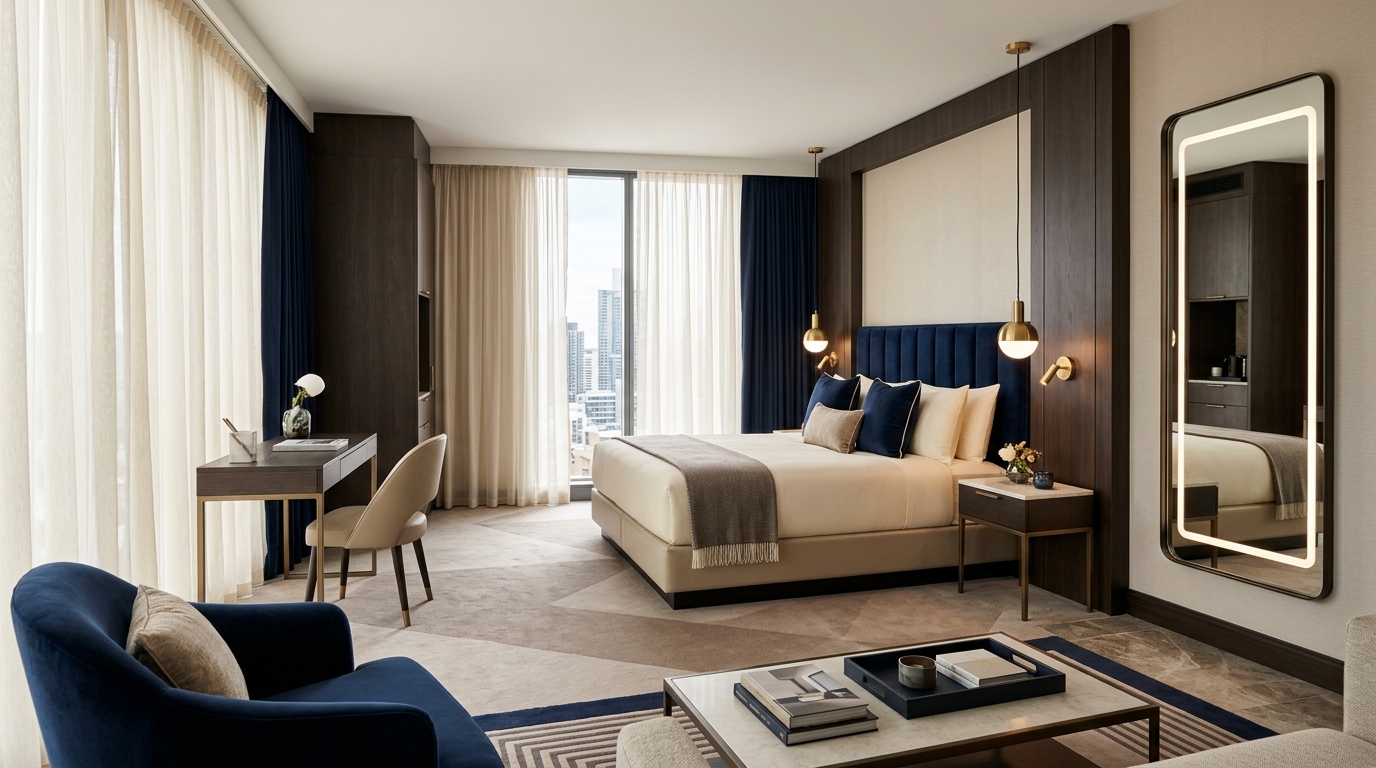
Introduction
In hospitality, a room is not just a space—it is a revenue-generating asset. Every design decision, material selection, and execution detail directly influences occupancy rates, guest satisfaction, and ultimately, profitability.
The Revenue–Design Connection
Guests today are not comparing your hotel to the one next door—they are comparing it to global standards. Platforms like booking engines and review sites have made design, comfort, and functionality transparent and measurable.
A poorly executed fit-out leads to:
- Lower review scores
- Reduced repeat bookings
- Increased maintenance costs
- Shortened asset lifecycle
Key Elements That Drive ROI
A high-performing hotel room fit-out focuses on:
1. Durability Under High Usage
Hospitality furniture is subjected to usage levels far beyond residential environments. Materials must withstand:
- Frequent cleaning cycles
- Heavy luggage impact
- Continuous occupancy turnover
2. Smart Space Optimization
Efficient layouts increase perceived room size without increasing actual square meters—critical for urban hotels.
3. Brand Consistency
Every room should reinforce the hotel’s identity, from finishes to lighting tone.
4. Ease of Maintenance
Poor material selection leads to operational headaches. Smart fit-outs reduce downtime and repair frequency.
The Cost of Getting It Wrong
Cutting corners during fit-out might reduce initial CAPEX, but it increases:
- OPEX (maintenance and replacements)
- Guest dissatisfaction
- Brand dilution
Conclusion
A hotel room fit-out is not an expense—it is a strategic investment. Operators who understand this outperform competitors consistently.